The debate around AI in qualitative research often gets framed as two extremes. One side wants to automate everything: upload your verbatims, press a button and get your themes. The other argues that AI can’t be trusted with anything beyond transcription.
In reality, the most effective approach sits somewhere in the middle. The AI does the heavy lifting by producing a strong first draft of the analysis, and the researcher applies their expertise to review, refine and challenge the output. It’s not about replacing researchers or rejecting automation. It’s simply a more efficient workflow that combines the speed of AI with the judgement and context that only a researcher can provide.
Where Automated Text Analysis Gets It Wrong
LLMs are very good at spotting patterns in text, but they don’t have the context that researchers bring to a project. They can identify themes and group responses, but they don’t understand the client, the category, or the wider business environment.
A model might generate a perfectly reasonable theme name based on the language it sees, but that terminology may not match how the client talks about their business. It might separate responses into distinct themes because the wording is different, even though they relate to the same underlying issue. Equally, it has no way of knowing which topics are likely to carry the most weight with stakeholders beyond what appears in the data itself.
This is why human review remains so important. AI can provide a strong first draft of the analysis, but researchers add the context, judgement and commercial understanding needed to turn it into something genuinely useful. They can challenge the output, refine themes, combine overlapping ideas and identify where the results are less clear-cut than they first appear.
The danger with fully automated analysis is that it often looks more certain than it really is. Every response is coded, every theme has a label and the output feels definitive. In practice, qualitative research is rarely that neat. Human oversight helps ensure the final analysis reflects both the data and the real-world context in which it will be used.
Why Manual Qualitative Coding Doesn’t Scale
Keeping humans in the loop doesn’t mean having humans code every single response.
Large-scale verbatim projects can involve tens of thousands of comments, and manually coding that volume of data can take days or even weeks. During that time, projects slow down, reporting timelines slip, and valuable insights remain buried in the data waiting to be uncovered.
Manual coding also comes with its own challenges. Different researchers will inevitably interpret some responses differently, particularly the more nuanced or ambiguous ones. Maintaining consistency across large datasets takes significant effort, and even then, subjective judgement can lead to variation in how responses are classified.
AI can help address these challenges by reviewing the entire dataset at once, identifying patterns across thousands of responses and producing a structured first draft far more quickly than would be possible manually. Researchers can then focus their time where it adds the most value: refining themes, challenging findings, providing context and building a compelling narrative around the results.
The goal isn’t to replace researchers with automation. It’s to remove the repetitive, time-consuming elements of the process so researchers can spend more time interpreting what the data means and helping clients act on it.
The First Draft Workflow for Qualitative Data Analysis
Step 1: The Machine Produces the First Draft
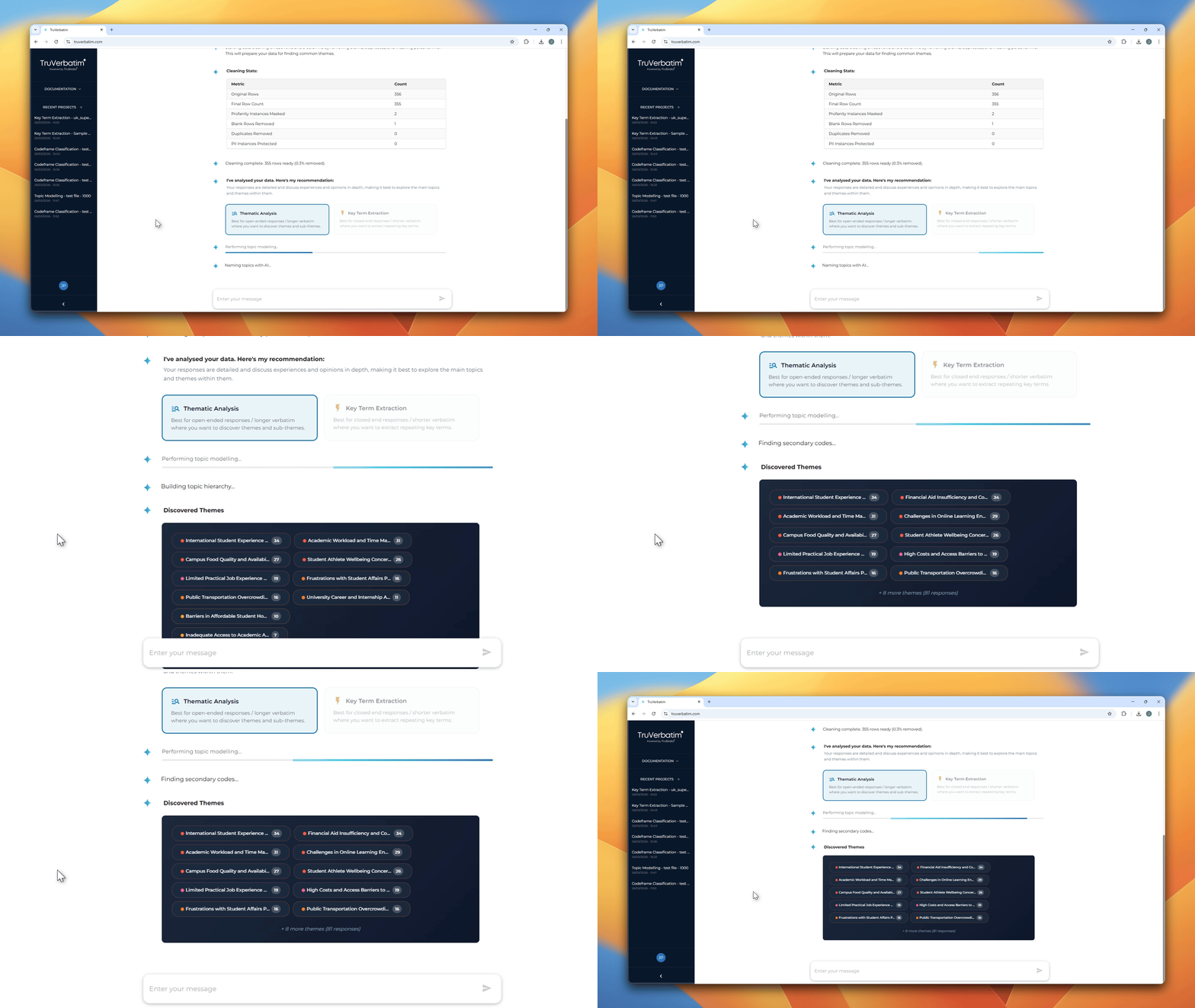
An automated AI text analysis pipeline can now complete the heavy lifting in minutes. From theme discovery and clustering through to coding, sentiment analysis and hierarchical theme structures, the result is a fully developed first draft of the analysis. Every verbatim is categorised, themes are organised into parent and sub-theme levels, and supporting metrics provide a clear picture of what is driving the findings.
This is where AI delivers the most value. It can process thousands of responses consistently, identify patterns across large datasets and apply the same analytical approach to every verbatim without fatigue or bias creeping in over time. What would traditionally take days or weeks can be completed in a fraction of the time, giving researchers a strong foundation to build from.
Step 2: The Researcher Reviews and Refines
The researcher then reviews the thematic framework and focuses on refining and validating the output rather than creating it from scratch. In practice, this typically involves:
- Renaming – AI-generated theme names are often accurate, but they may not reflect the language used by the client or category. Researchers can quickly adjust labels so they align with how stakeholders talk about the business.
- Merging – Sometimes the AI identifies two themes that are statistically distinct but represent the same operational issue. These can be combined into a single theme, with counts and metrics automatically updated.
- Splitting – Occasionally a theme is too broad and contains multiple issues grouped together because of similar language. Researchers can separate these into more meaningful themes and re-run the analysis within that subset if needed.
- Reordering – AI naturally prioritises themes based on volume. Researchers can reorder findings based on commercial relevance, stakeholder priorities or strategic importance.
- Validating – Reviewing sample verbatims, checking coding accuracy and sense-checking the overall framework helps ensure the output reflects both the data and the wider business context.
This review process typically takes 30–60 minutes rather than days or weeks. The AI handles the processing at scale, while the researcher applies the expertise, context and critical thinking needed to turn the output into a robust piece of analysis.
This is exactly the workflow behind TruVerbatim – AI-powered verbatim analysis that produces the first draft, with full researcher control over the final output. See how it works on our solutions page.
Step 3: The Machine Applies the Refined Framework
Once the researcher has reviewed and refined the framework, the system updates the analysis automatically. Merged themes are consolidated, frequencies are recalculated, and any renamed themes are reflected across every output.
Charts, tables, exports and presentation slides all update from the same underlying framework, so researchers don’t need to manually amend each one. A change made once is applied everywhere, ensuring consistency while removing another layer of repetitive work from the process.
Why This Approach Beats Either Extreme
The result is a process that combines the speed of AI with the judgement and experience of a researcher.
It’s significantly faster than a fully manual approach. The AI can analyse and structure thousands of responses in minutes, while a researcher can review and refine the output in under an hour. The same task could otherwise take days or even weeks.
It’s also more effective than relying on automation alone. Researchers bring context that the AI doesn’t have, whether that’s understanding client terminology, recognising when themes should be combined or separated, or knowing which findings are likely to matter most to stakeholders.
At the same time, it avoids some of the challenges of manual coding. Changes made by the researcher are applied consistently across the entire dataset, removing variation that can occur when multiple people code responses over an extended period.
Most importantly, it allows researchers to focus on the work that creates value. Rather than spending hours reading and tagging individual responses, they can concentrate on interpreting findings, challenging assumptions and developing a clear story from the data.
What the Review Interface Needs to Get Right
Not all human-in-the-loop systems are created equal. The quality of the review experience plays a huge role in whether researchers actively improve the analysis or simply accept the output because making changes is too cumbersome.
- Show the full picture first – Researchers should be able to see the complete thematic framework, including parent themes, sub-themes, frequencies and sentiment, before diving into the detail. Understanding the overall structure makes it easier to make informed decisions about individual themes.
- Make editing simple – Renaming, merging or splitting themes should be quick and intuitive. If making a change is more effort than leaving it alone, important improvements are less likely to happen.
- Maintain a clear audit trail – Keeping a record of the original AI output alongside any researcher changes provides transparency, supports quality assurance and helps demonstrate which parts of the process were automated and which were reviewed by a human.
TruVerbatim was designed around these principles – a researcher-first interface where AI does the heavy lifting and you stay in control. Book a demo with our team to see it in action.
The Trust Conversation Around AI in Market Research
One of the most common questions clients ask is: “Can we trust the AI output?”
The answer is that trust doesn’t come from the AI alone. It comes from the process. AI can produce a comprehensive first draft of the analysis, but that output is then reviewed, refined and approved by an experienced researcher. In many ways, it’s not that different from a traditional workflow where a junior analyst completes the initial coding and a senior researcher reviews and signs off on the final result.
Transparency is also important. When the methodology clearly states that themes were identified using AI-assisted analysis and then reviewed by the research team, clients understand how the work was completed and where human expertise was applied. Ultimately, trust comes from knowing that the output has been challenged, refined and validated by someone who understands both the data and the wider context.
AI Text Analysis Puts Judgement Where It Belongs
The debate about whether AI should replace researchers is largely the wrong one. The more important question is where researchers add the most value.
Is it spending days reading thousands of verbatims and manually assigning codes? Or is it reviewing a complete thematic framework, challenging the findings, applying context and shaping the story the data is telling?
AI is well suited to processing large volumes of text and identifying patterns at scale. Researchers are well suited to interpretation, judgement and understanding the wider context behind the data. The most effective approach is not choosing one over the other, but combining both strengths in a workflow that allows each to focus on what it does best.
If you’re looking for an AI text analysis platform that keeps researchers in control, explore TruVerbatim or get in touch with our consultancy team to discuss your next project.